salakhalimunmountain.com – Pitching a camp in the high-elevation wilderness of Mount Halimun Salak National Park means preparing for sudden, high-energy weather changes. As tropical trade winds sweep across the West Java volcanic corridor, warm air forced up steep ridge flanks rapidly cools, creating localized gale-force wind gusts accompanied by heavy, driving rain. In these turbulent high-altitude conditions, a flimsy or poorly anchored tarp can quickly turn into a flapping sail, ripping at tie-out points or pooling gallons of rainwater that can collapse your shelter. Mastering the art of rigging rain tarp shelters in Halimun winds is an essential campcraft skill that ensures you stay warm, dry, and protected through the stormiest jungle nights.
Unlike camping in protected lowlands, rigging a tarp on exposed Halimun ridges requires a deep understanding of wind dynamics, structural tensioning, knot selection, and anchor physics. When gusting winds hit a flat sheet of silnylon or polyester, they exert tremendous kinetic force. By combining aerodynamic geometry, flexible tensioning systems, and bombproof anchor placements, you can engineer a storm-resistant sanctuary that stands strong against the mountain’s wild elements.
Selecting and Evaluating Storm-Resistant Campsites
The first line of defense against high winds on Mount Halimun is intelligent site selection. Before unrolling your tarp, take time to evaluate your immediate environment for natural windbreaks and objective hazards.
Avoid pitching shelters directly on exposed ridge crests, wind gaps, or narrow saddles where winds are compressed and accelerated. Instead, drop down 10 to 15 meters on the lee (leeward) side of the ridge shoulder, using the mountain’s natural landform to block the worst of the gale. Pay close attention to overhead canopy hazards: identify and avoid dead standing trees, decaying branches, or heavy fruit pods—often called “widowmakers”—that could snap in strong gusts and crash onto your shelter.
Orienting Your Pitch to Wind Direction
Once you select a safe, level spot, determine the prevailing wind direction using micro-climatic cues, such as the tilt of high bamboo shoots or the direction of drifting rain mist.
Always pitch the lowest, most reinforced edge of your tarp shelter directly into the wind. This allows high-velocity gusts to slide smoothly over the aerodynamic slope rather than catching under an elevated lip and lifting the shelter off the ground like a parachute. Keeping the windward edge anchored tight to the terrain creates a calm, protected dead-air pocket on the sheltered side of your camp.
Choosing Aerodynamic Tarp Configurations
The geometric shape of your tarp pitch dictates how efficiently it sheds wind and sheds tropical rainfall. While a high, open A-frame pitch is great for gentle lowland rain, it creates high surface resistance during mountain storms. In high-wind environments, reach for low-profile, aerodynamic configurations.
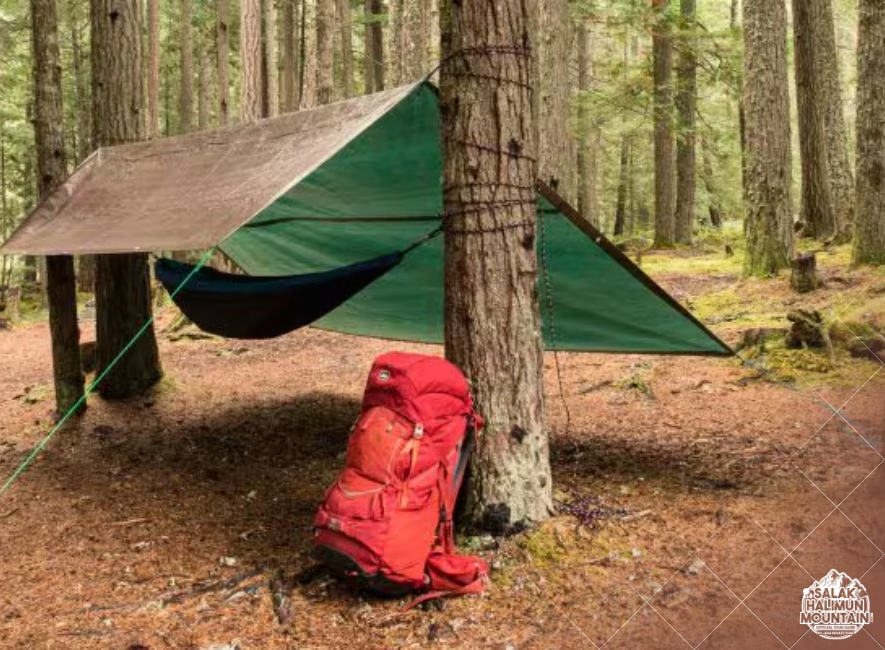
The **Lean-To Pitch** is a classic windward design where the back wall is pinned directly to the ground into the wind at a sharp 45-degree angle, directing air currents up and over your sleeping area. For 360-degree storm protection, the **Flying A-Frame** or **Plow-Point Pitch** uses a single elevated front anchor point while pinning three corners tightly to the earth, creating a rigid, pyramid-like structure that deflects strong, swirling winds from multiple directions.
Eliminating Sag and Water Pooling
Wind and water work together to destroy tarp shelters. If wind creates a pocket or slack area in your tarp fabric, driving rain will instantly pool in that depression. The added weight of heavy water pockets stresses tie-outs and pulls anchors out of wet soil.
To prevent pooling, maintain steep canopy angles—at least 30 to 45 degrees—so torrential rain drains immediately off the edges. Ensure every panel is pulled bone-taut during setup, creating a drum-tight surface that vibrates rather than flaps when struck by sudden wind gusts.
Mastering High-Tension Ridgelines and Knots
The backbone of any strong tarp setup is a continuous high-tension ridgeline suspended between two sturdy anchor trees. A continuous ridgeline running beneath the tarp supports the weight of heavy, wet fabric and distributes wind loads evenly across the entire structure.
Use high-tensile, low-stretch cordage such as Dyneema, UHMWPE, or non-stretch paracord for your main ridgeline. Standard nylon cord stretches significantly when wet, causing your tarp to sag during heavy midnight downpours. Securing your ridgeline with reliable friction knots allows you to apply intense mechanical leverage and adjust tension quickly without untying wet cordage in the dark.
Essential Knots for Storm Rigging
Secure the head end of your continuous ridgeline to an anchor tree using a **Bowline** or a **Taut-Line Hitch** with a quick-release toggle. On the opposite tree, pass the line around the trunk and construct a **Trucker’s Hitch**. The Trucker’s Hitch acts as a 3:1 mechanical pulley system, allowing you to pull the main ridgeline drum-tight before securing it with a couple of half-hitches.
To attach the tarp to the continuous ridgeline, use **Prusik Knots** or **Klemheist Knots** tied with smaller accessory cord loops through the tarp’s tie-out rings. These friction knots slide smoothly along the main line when unloaded, but bite down firmly when tensioned, allowing you to stretch the tarp fabric perfectly tight along the ridge vector.
Designing Shock-Absorbing Guyline Systems
High winds subject guyline points to rapid, violent shock loads. If a guyline is tied rigidly between a tarp loop and a ground stake, a sudden 50 km/h wind gust can tear out the tarp grommet or snap the stake out of wet, loose soil.
Incorporate elastic shock-absorption into every guyline tie-out point. Loop heavy-duty shock cord (bungee loops) or tough rubber bands between the tarp loop and your guyline cord. When strong winds strike, the shock cord stretches temporarily to absorb the kinetic energy of the gust before gently snapping back into place, protecting your tarp fabric, stitching, and stakes from structural failure.
Anchoring Strategies in Wet Jungle Soil
Halimun rainforest soil is often saturated, soft, and deep, making standard lightweight aluminum tent stakes prone to pulling out under tension. Adapt your ground anchors to match tropical soil conditions.
Instead of relying solely on thin wire stakes, use the **Deadman Anchor** technique. Tie your guyline around a thick, sturdy piece of hardwood branch or a flat volcanic rock, bury it 20 to 30 centimeters deep in wet mud, and stomp the soil down firmly on top of it. Alternatively, weigh down placed tent stakes with heavy, flat basalt rocks stacked in a tripod structure over the stake entry point, ensuring your guyline anchors stay rock-solid through the fiercest night storms.
Maintaining Camp Safety and Equipment Care
Once your tarp is pitched and tensioned, conduct a quick safety check before settling in for the night. Ensure all sharp sticks, rocks, and root tips under the tarp footprint are cleared to protect your ground sheet or sleep pad from punctures.
Keep a small, accessible knife and extra cordage inside your pack’s brain compartment or chest pocket in case an emergency line adjustment is needed during a storm. Before sleeping, do a final sweep around the perimeter, re-tightening Prusik loops and Trucker’s hitches to compensate for any initial fabric stretch. Taking these proactive steps ensures your shelter remains an impenetrable, warm sanctuary, allowing you to rest peacefully while the wild mountain winds roar across the high peaks of Halimun Salak.
So, if you’re ready to explore the wonders of Mount Salak Halimun, head over to our ONLINE BOOKING PAGE and let’s start planning your adventure. Or simply CLICK THIS LINK to chat with us on WhatsApp.
With our team, you’re not just getting a guide; you’re gaining a local friend who will ensure your trip is nothing short of extraordinary.